Working Water Filter Model for School Project | Easy DIY Water Filtration Experiment (Grades 3–5)
Learn how to make a Working Water Filter Model for school projects using sand, gravel, and charcoal. Easy DIY science experiment for Grades 3–5 with materials, steps, explanation, and viva questions.
Easy DIY Water Filtration Science Project for Students
Clean water is one of the most important resources on Earth. In this simple and educational school science project, students learn how a working water filter model helps remove impurities from dirty water using natural materials like sand, gravel, and charcoal.
This project is perfect for Grades 3 to 5 students and is widely used in science fairs, STEM activities, environmental studies, and practical learning programs in schools across India, USA, UK, and Australia.
Why This Water Filter Project is Important
Water pollution is a major environmental issue. Many areas around the world still struggle to access clean drinking water. This project helps students understand:
- The importance of clean water
- Basic water purification methods
- Environmental awareness
- Scientific observation and experimentation
It also develops creativity, problem-solving, and hands-on STEM learning skills.
Project Overview
Project Name
Working Water Filter Model
Project Type
Science Experiment / Environmental Science Project
Recommended For
- Grade 3 students
- Grade 4 students
- Grade 5 students
Difficulty Level
Easy
Time Required
30–45 minutes
Materials Required for Water Filter Model
Students can easily make this project using low-cost household materials.
Materials List
- Plastic bottle
- Cotton or cloth
- Sand
- Small stones or gravel
- Charcoal
- Dirty water
- Scissors
- Transparent glass or container
Scientific Principle Behind Water Filtration
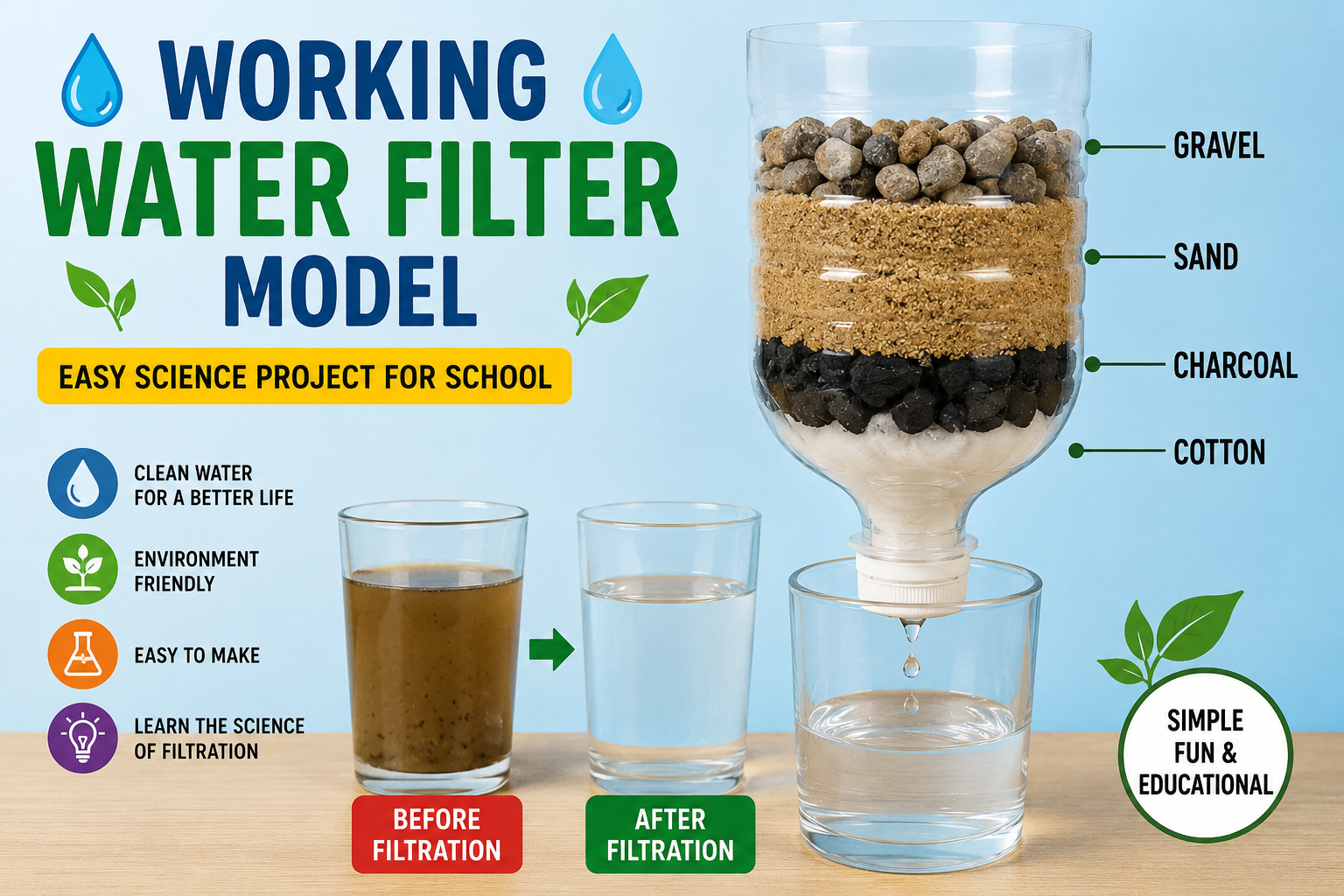
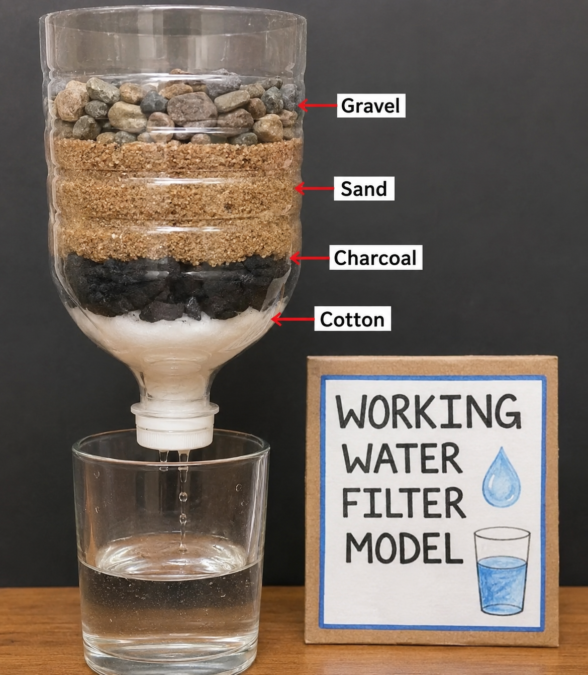
Water filtration is the process of removing impurities from water. Different materials filter different types of particles.
How Each Layer Works
1. Gravel Layer
Removes large dirt particles and debris.
2. Sand Layer
Filters smaller impurities from water.
3. Charcoal Layer
Absorbs odor, color, and some harmful substances.
This project demonstrates the basic principles used in real water purification systems.
Step-by-Step Procedure
Step 1: Prepare the Bottle
Cut a plastic bottle into two halves.
Step 2: Create the Filter
Turn the top part upside down like a funnel.
Step 3: Add Cotton
Place cotton or cloth at the neck of the bottle.
Step 4: Add Filtration Layers
Add the following layers:
- Charcoal
- Sand
- Gravel
Step 5: Set Up the Model
Place the filter over a transparent container.
Step 6: Pour Dirty Water
Slowly pour dirty water through the filter.
Step 7: Observe the Results
Watch how the water becomes cleaner after filtration.
Observation
| Before Filtration | After Filtration |
|---|---|
| Dirty and cloudy water | Cleaner water |
| Visible dirt particles | Fewer impurities |
Result of the Experiment
The filtration layers removed many visible impurities from the dirty water. The water became cleaner after passing through the different layers.
Conclusion
This working water filter model teaches students how filtration helps clean water. It also spreads awareness about water conservation and the importance of safe drinking water.
Real-Life Applications of Water Filtration
This science project connects classroom learning with real-world applications.
Common Uses:
- Home water purifiers
- Water treatment plants
- Emergency filtration systems
- Rainwater harvesting systems
Benefits of This School Project
Educational Benefits
- Encourages scientific thinking
- Develops observation skills
- Promotes environmental awareness
Practical Benefits
- Low-cost project
- Easy to build
- Safe for children
- Excellent for science exhibitions
Safety Precautions
- Do not drink the filtered water directly
- Handle scissors carefully
- Wash hands after the experiment
Viva Questions and Answers
Q1. What is water filtration?
Water filtration is the process of removing impurities from water.
Q2. Why is charcoal used?
Charcoal helps remove odor and some impurities.
Q3. Which layer removes larger particles?
Gravel removes large dirt particles.
Q4. Is filtered water always safe to drink?
No. Additional purification may still be required.
Q5. Why is clean water important?
Clean water helps prevent diseases and keeps people healthy.
Tips to Make Your Project More Attractive
- Use transparent containers for better visibility
- Add labels to each filtration layer
- Decorate the model with charts and diagrams
- Include a “Before and After” water sample display
Best Keywords for SEO
If you publish this article on your website, these keywords can help improve Google rankings:
- Working water filter model
- Water filter science project
- Easy school science project
- Water filtration experiment for kids
- Grade 5 science project
- Environmental science project
- DIY water filter for school
- STEM project for primary students
- Science fair water filter project
- Water purification model for school
Final Thoughts
The Working Water Filter Model is one of the best science projects for primary school students because it combines environmental awareness with practical STEM learning.
It is:
- Educational
- Easy to make
- Budget-friendly
- Highly engaging for students and parents
This project is ideal for:
- School exhibitions
- Science fairs
- Classroom activities
- YouTube educational videos
- STEM workshops
By creating projects like this regularly, students develop curiosity, creativity, and scientific thinking while learning important real-world concepts.